
Please consider sharing this newsletter with someone whom you appreciate, like or just want to help. If this newsletter has been shared with you by someone who likes you please consider subscribing, our aim is to help you get more of what you want. Just enter your email address at the bottom of this email to get started and you’ll immediately have access to other great articles, tips and techniques – there’s no cost to you, it’s completely at our expense!
Table of Contents
Here’s a quick hack to build trust. Make a small mistake early in a presentation or relationship. I know it seems silly and counterintuitive to making a great impression but it works.
What Is The Deliberate Mistake Technique?
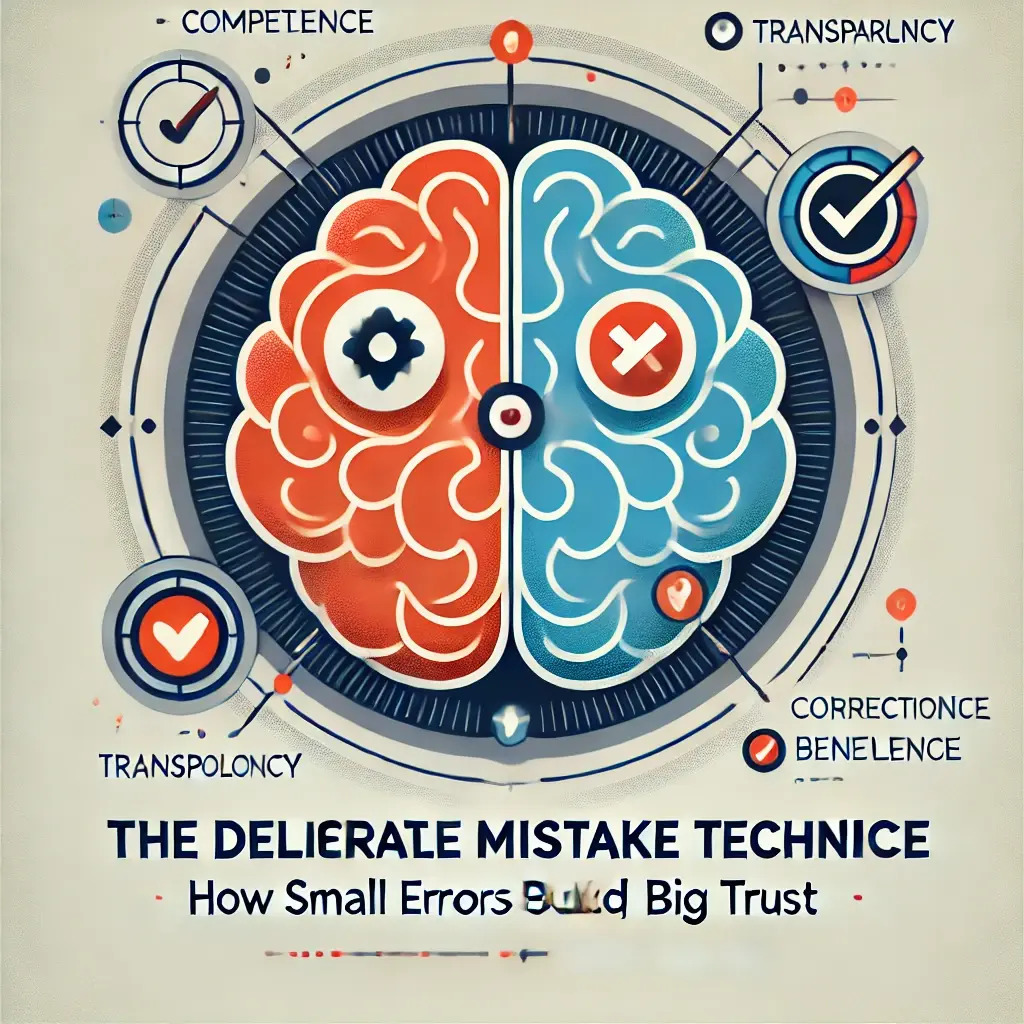
Remember, our brains are pattern-seeking machines, and the pattern for trust is: trust = competency + transparency + benevolence (good intent).
Imagine you’re giving a presentation about quarterly sales figures. You begin with a slide showing $1.2 million in revenue, then pause, check your notes, and say, “I apologize – that’s $1.1 million. I’m not sure why the slide is slightly higher, but I want to make sure we’re working with accurate numbers.” In that moment, you are demonstrating that you value accuracy over your ego. You have also displayed the three key elements of trust:
Transparency
Benevolence and
Competence (because you spotted the error yourself and corrected it)
Consider a real estate agent showing a property who tells their clients that the home was built in 2002. A few minutes later, they correct themselves: “Sorry, I wasn’t 100% certain, so I double-checked. The house was built in 2003, not 2002. I always want to be as precise as possible with the details I give you.” This minor correction showcases meticulous attention to accuracy and builds trust by reinforcing transparency, good intentions, and competence.
Here’s one of my favorites: Picture a candidate in a job interview saying, “I led a team of nine… pardon me, I should say a team of seven people on the project. The additional two members only joined my team for the last 60 days of the project.” If a candidate corrects themselves on a minor detail that should make them look more impressive, we assume they are precise and honest in all their other answers.
Why Does It Work?
The deliberate mistake technique works through several psychological mechanisms:
Disarms Skepticism
When people encounter someone who appears perfect, it triggers natural skepticism. We instinctively know nobody is perfect, so we become wary. By making and correcting a small mistake, you lower people’s defensive barriers because you’re behaving in a way that matches their expectations of human behavior.
The Pratfall Effect
This is the scientific name for a phenomenon where competent people become more likable after making a minor mistake. Social psychologist Elliot Aronson discovered this effect in 1966. The key is first to establish competence—then, the mistake makes you more relatable without undermining your expertise.
Creates Psychological Safety
When you acknowledge and correct your own mistakes, you signal that it’s safe for others to be imperfect too. This fosters an environment of psychological safety, making people more likely to trust and open up to you.
Demonstrates Honesty
By correcting yourself, you show that you value truth over appearance. This builds credibility because people see that you’re willing to sacrifice looking perfect to be accurate.
Pattern Interruption
The mistake-and-correction pattern breaks the expected flow of interaction. This slight disruption increases attention and engagement, making people more likely to remember what comes after the correction.
Contrast Effect
When you make a small mistake but then demonstrate high competence in your core expertise, the contrast makes your competence appear even more impressive. It’s like how a diamond appears brighter when set against a dark background.
How to Use the Deliberate Mistake Technique Effectively (And Some Things to Avoid)
To ensure this technique works in your favor rather than backfiring, consider the following tips:
-
The error must be minor enough not to damage your credibility.
-
Use It Early – Introduce a small mistake early in an interaction. And only one!
-
Follow It with Expertise – Immediately demonstrate your competence and knowledge after the correction.
-
Correct It Promptly – Acknowledge the mistake and fix it, reinforcing credibility.
-
Avoid Critical Errors – The mistake should never involve:
-
Core competencies in your field
-
Critical information or data
-
Ethical or moral issues
-
Sensitive personal information
-
-
Adapt to Your Audience – Some audiences may respond better than others. Use this technique in contexts where engagement and participation are encouraged.